Search engine optimization has changed dramatically over the years. In the early days of the internet, ranking on search engines was mostly about using certain tricks that helped websites appear at the top of results pages. However, as search engines became smarter and user expectations grew, SEO evolved into a more sophisticated and user-focused strategy. Today, the focus is no longer just on ranking higher but on delivering valuable information, meaningful experiences, and trustworthy content.
Understanding the difference between old school SEO and next generation SEO helps marketers, bloggers, and businesses adapt to modern search trends and build sustainable online visibility.
The Paradigm Shift: From Manipulation to Intent
One of the biggest changes in SEO is the shift from manipulation to understanding user intent.
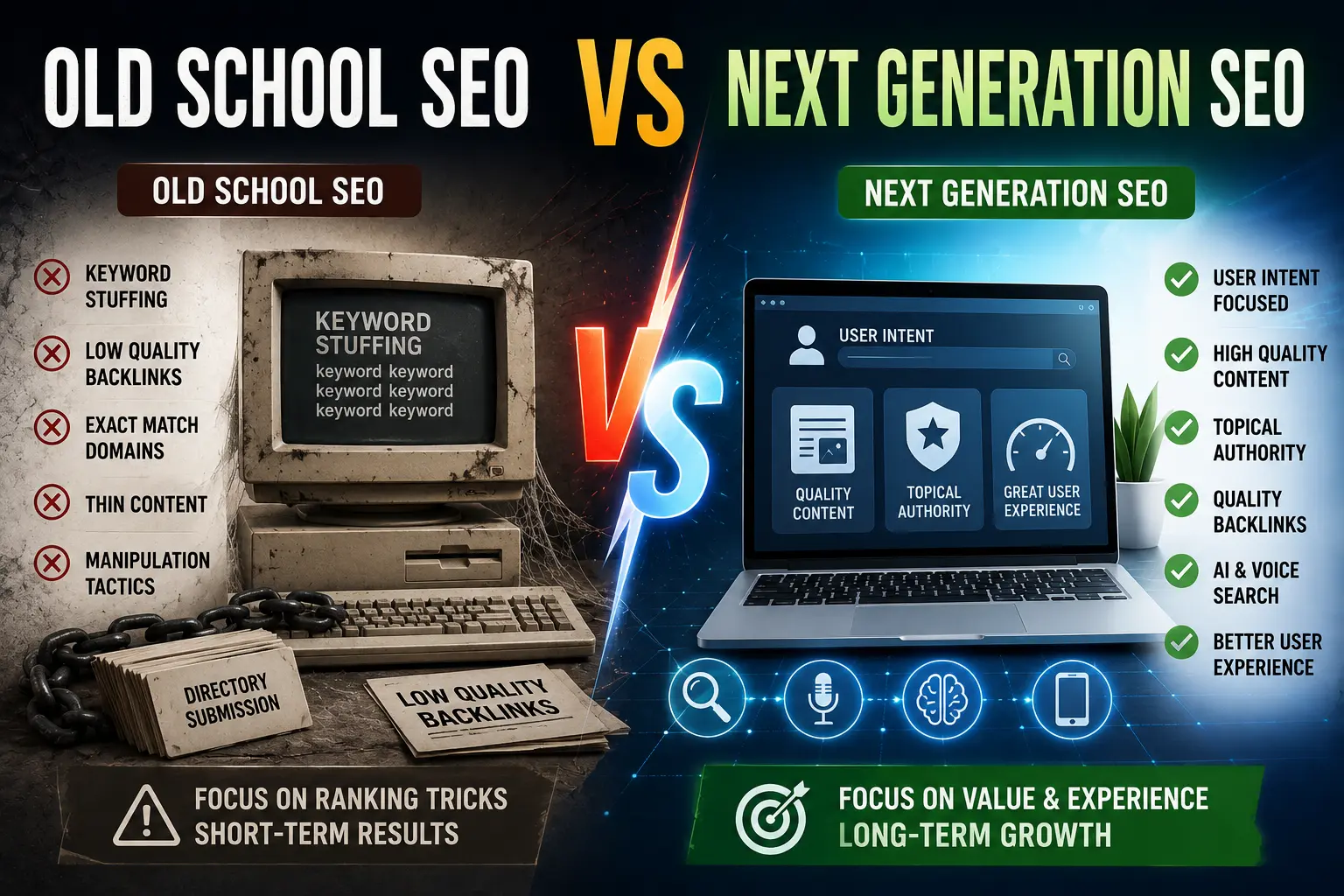
- In the past, search engines mainly relied on basic signals such as keywords and backlinks. Because of this, websites could manipulate rankings by stuffing keywords into content or creating large numbers of artificial links.
- Modern search engines are designed to understand what users are actually searching for. Instead of focusing only on keywords, they analyze context, relevance, and user behavior.
Example: A blog that once ranked by keyword stuffing may now see a drop in traffic unless it provides in-depth answers to user questions.
Key takeaway: Today, SEO success depends on helping users, not tricking search engines.
The Era of Old School SEO
Old school SEO refers to the techniques that were widely used during the early stages of search engine development. At that time, search algorithms were simpler and easier to influence.
Some common practices included:
- Keyword stuffing where the same keyword was repeated multiple times in content.
- Exact-match domains designed solely to rank for specific search terms.
- Mass link building through directories, forums, and low-quality websites.
- Hidden text or cloaking used to show different content to search engines and users.
While these methods often worked in the past, they rarely focused on the needs of readers. As search engines improved their algorithms, many of these tactics became ineffective or even harmful.
The Emergence of Next Generation SEO
Next generation SEO represents the modern approach to search optimization. It focuses on creating meaningful experiences for users while aligning with how search engines evaluate quality.
This new approach emphasizes:
- High-quality content that answers questions comprehensively
- Understanding search intent rather than just matching keywords
- Natural keyword usage in context
- Website authority and credibility
- Technical performance and mobile optimization
Instead of short-term ranking tricks, next generation SEO focuses on long-term growth by building trust with both users and search engines.
Example: Sites like HubSpot or Moz focus on high-value content and topical authority instead of shortcuts, which boosts long-term rankings.
Comparing Old School SEO and Next Generation SEO
The differences between the two approaches highlight how much SEO has evolved.
| Old School SEO | Next Generation SEO |
| Focus on search engine manipulation | Focus on user satisfaction |
| Keyword stuffing | Natural keyword usage |
| Quantity of backlinks | Quality and relevance of backlinks |
| Thin or duplicated content | In-depth, valuable content |
| Short-term ranking gains | Sustainable long-term growth |
This shift reflects a broader change in the digital world where authenticity and usefulness are valued more than shortcuts.
The Rise of AI-Powered Search
Search behavior is changing rapidly with the growth of AI-powered search experiences and conversational platforms. Users are increasingly finding answers directly through AI-generated responses instead of only clicking on traditional search results.
Modern SEO now includes concepts such as:
- Answer Engine Optimization (AEO)
- Generative Engine Optimization (GEO)
- Search Experience Optimization (SXO)
These approaches focus on helping websites become trusted sources that AI systems can understand, reference, and recommend.
To improve visibility in AI-driven search environments, websites now benefit from:
- Clear and well-structured content
- Strong topical authority
- Accurate and trustworthy information
- Proper use of schema and structured data
- Direct answers to common user questions
Key takeaway: Modern SEO is no longer limited to ranking on search engines. It also involves becoming a reliable source for AI-generated answers and conversational search platforms.
The Growth of Zero-Click Searches
Many users now receive answers directly on search engines or AI-powered platforms without visiting a website. These are known as zero-click searches. Featured snippets, AI-generated summaries, knowledge panels, and conversational search tools allow users to access information instantly. Because of this, businesses must focus on creating content that provides clear and direct answers.
Modern websites can improve visibility in zero-click search environments by:
- Using clear headings and structured formatting
- Answering questions directly
- Adding schema markup and structured data
- Creating trustworthy and accurate content
- Building strong topical authority
Key takeaway: Websites that provide fast, reliable, and easy-to-understand information are more likely to appear in modern search experiences.
The Power of Content-Driven SEO
Content has become the foundation of modern SEO. Search engines now reward websites that consistently provide helpful, well-structured, and informative content.
Content-driven SEO involves:
- Creating detailed articles that fully explain a topic
- Covering related subjects to build topical authority
- Updating information regularly to maintain accuracy
- Writing in a clear and accessible tone for readers
When content genuinely helps users, it naturally attracts engagement, backlinks, and higher search visibility.
Example: A blog updating old posts regularly and adding internal links often sees organic traffic double in less than a year.
The Importance of E-E-A-T in Modern SEO
Modern search engines prioritize content that demonstrates experience, expertise, authoritativeness, and trustworthiness, commonly known as E-E-A-T. Websites that provide accurate information, real-world knowledge, and trustworthy insights are more likely to gain visibility in search results. This is especially important in industries where content quality and accuracy matter significantly.
Building strong E-E-A-T involves:
- Publishing expert-level content
- Maintaining factual accuracy
- Updating outdated information regularly
- Showing transparency and credibility
- Building a trustworthy online reputation
Key takeaway: Trust and expertise are becoming major factors in modern SEO success.
Building Topical Authority
Search engines increasingly prefer websites that cover topics comprehensively instead of publishing isolated content on unrelated subjects.
Topical authority is built by:
- Creating multiple related articles around a niche
- Linking related pages internally
- Covering beginner to advanced topics
- Publishing consistent and informative content
- Updating existing content regularly
A website with strong topical authority is often viewed as a trusted source within its industry, improving long-term search visibility and authority.
How Technology Has Redefined SEO
Advancements in technology have transformed how search engines evaluate websites. Modern algorithms analyze many factors beyond simple keywords.
Key technological influences include:
- Semantic search that understands context and meaning
- Voice search optimization for conversational queries
- Mobile-first indexing that prioritizes mobile usability
- Faster page loading and better site performance.
Key takeaway: SEO is no longer about tricks but it’s about creating a seamless digital experience for users across devices.
The Rise of Entity-Based SEO
Modern search engines are becoming better at understanding entities such as people, brands, products, locations, and concepts rather than relying only on keywords.
Entity-based SEO focuses on:
- Building a clear brand identity
- Creating context-rich content
- Connecting related topics naturally
- Using schema markup and structured data
- Improving semantic relevance across content
This approach helps search engines better understand relationships between topics and improves visibility in semantic and AI-driven search results.
The Ethical Divide: Black Hat vs White Hat SEO
Another important difference between old and modern SEO lies in ethical practices.
- Black hat SEO involves manipulative techniques designed to trick search engines, such as spam links, hidden text, and automated content. These methods may produce quick results but often lead to penalties or long-term damage.
- White hat SEO, on the other hand, follows search engine guidelines and focuses on ethical strategies like quality content, natural link building, and user-focused optimization.
Long-term SEO success depends on white hat practices that provide real value.
The Changing User Experience
User experience has become a central factor in search rankings. Search engines analyze how visitors interact with a website to determine whether the content satisfies their needs.
Important elements include:
- Fast loading speed
- Mobile-friendly design
- Easy navigation
- Clear and readable content structure
When visitors find information quickly and enjoy the browsing experience, they are more likely to stay longer and return again.
Example: Google now uses Core Web Vitals to evaluate page experience. Websites that meet these benchmarks perform better in rankings.
What Defines the Future of SEO
The future of SEO will likely continue moving toward deeper understanding of users and content quality. Search engines are becoming more advanced in interpreting language, intent, and context.
Future SEO strategies may focus on:
- Topic authority rather than individual keywords
- Comprehensive and trustworthy information
- Voice and conversational search queries
- Integration of multimedia content such as videos and visuals
Key takeaway: Businesses that focus on value, expertise, and user experience will thrive in the evolving SEO landscape.
Old School SEO vs Next Generation SEO: Lessons for Marketers
- Focus on user intent rather than keyword density
- Create in-depth, valuable content
- Build high-quality backlinks from trusted sources
- Optimize for mobile devices and fast loading speeds
- Update content regularly to maintain relevance
- Prioritize user experience and website credibility
- Create content that can perform well in both traditional and AI-powered search environments
Conclusion
The shift from old school SEO to next generation SEO shows how much the digital world has changed. Techniques that used to work, like shortcuts and tricks, no longer bring long-term results. Today, success in SEO comes from creating high-quality content, focusing on a great user experience, and following ethical practices. Marketers who adapt to these changes and provide real value will build lasting results and stronger connections with their audience.
Frequently Asked Questions
Some basic principles like keyword research and link building still matter, but outdated practices like keyword stuffing are harmful.
High-quality content helps search engines understand your expertise and provides real value to readers.
The shift from manipulating search engines to satisfying user intent and creating authentic, helpful content.
Good UX improves engagement, reduces bounce rates, and increases the likelihood of repeat visits, which search engines reward.
It may give short-term gains, but it often results in penalties and can damage long-term credibility.
People are also reading: